5,000 Games, Zero Wins: The Hidden Cost of Casino Library Overload

The pitch is everywhere in American online gambling marketing: "Over 5,000 games!" "New titles added weekly!" "The biggest library in online gaming!" The implication is straightforward—more games equal more opportunity, more fun, and more chances to win. It's a compelling sales argument. It's also, according to a growing body of behavioral research, quietly making players worse at gambling.
This isn't a niche academic concern. It's a measurable, practical phenomenon with real financial consequences for real players, and it's one of the reasons platforms built around curation—like Hugo Casino Norge—are producing noticeably different player behavior than their sprawling American counterparts.
Your Brain on Options
In 2000, psychologists Sheena Iyengar and Mark Lepper published what became known as the 'jam study'—a landmark experiment demonstrating that shoppers presented with 24 varieties of jam were far less likely to actually purchase any jam than those presented with just six options. The paradox of choice, as Barry Schwartz later popularized it, runs counter to everything we intuitively believe about preference and freedom: more options don't make us happier or more decisive. They make us anxious, avoidant, and prone to regret.
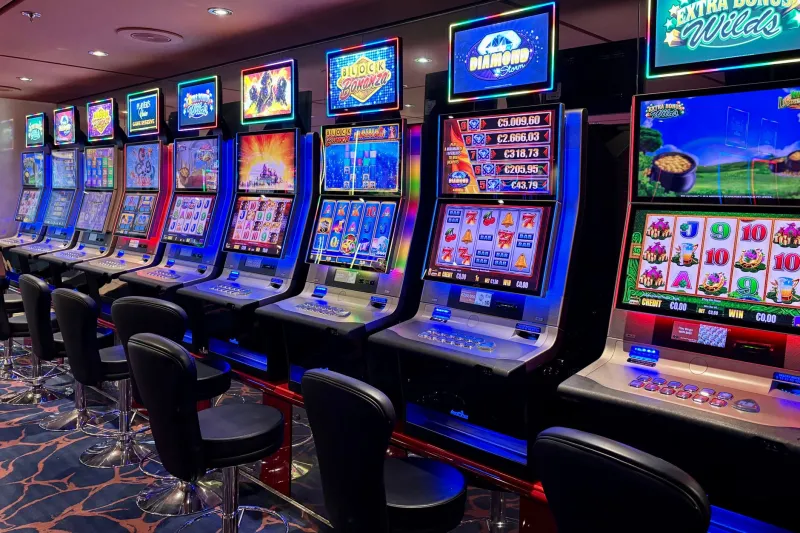
Now apply that to a casino lobby with 5,000+ titles.
A player landing in that environment faces an immediate and significant cognitive burden. Before a single spin happens, they've already burned mental energy just trying to decide where to start. They've scrolled past hundreds of games that all look vaguely similar. They've second-guessed their initial choice three times. By the time they're actually playing, they're already operating at reduced cognitive capacity—and that matters enormously in a context where discipline and decision-making quality directly affect financial outcomes.
Decision Fatigue Is Not Metaphorical
Decision fatigue is a well-documented neurological reality, not a productivity blogger's buzzword. The prefrontal cortex, which handles executive function, planning, and impulse control, operates on limited resources. Every decision you make—even trivial ones—draws down that reserve. When it's depleted, your decision-making shifts toward impulsive, low-effort choices and away from deliberate, considered ones.
For a casino player, depleted executive function looks like this: chasing losses after a bad run because stopping feels like giving up. Increasing bet sizes mid-session to manufacture excitement or accelerate recovery. Abandoning a game you were playing sensibly because something flashier caught your eye. Staying longer than you intended because you never quite found the 'right' game and feel like you haven't really started yet.
All of these behaviors inflate losses beyond what the underlying math would predict. They're not products of bad luck—they're products of cognitive overload. And massive game libraries are a significant contributor to that overload.
The Option Anxiety Loop
There's a secondary effect that's particularly insidious: what behavioral economists call option anxiety, or the persistent nagging feeling that whatever you're currently doing, something better might be available elsewhere.
In a 200-game library, you can reasonably feel like you've explored your options and made a deliberate choice. In a 5,000-game library, that feeling is essentially impossible to achieve. There's always another page of titles. There's always a new release you haven't tried. The sense of having 'settled' on your game is replaced by a low-grade dissatisfaction that makes it harder to stay present and engaged in whatever you're actually playing.
Engagement, as we've established, is not just an emotional nicety—it's a functional component of responsible gambling behavior. A distracted, dissatisfied player is a player making worse decisions.
Hugo Casino's Constrained Library as a Feature, Not a Bug
Hugo Casino Norge operates with a deliberately focused game selection. To American players accustomed to the 'more is more' marketing of US-facing platforms, this might initially read as a limitation. It isn't.
What a curated library actually provides is decision closure—the ability to quickly, confidently arrive at a game you genuinely want to play. Players aren't burning cognitive resources on infinite browsing. They're not haunted by the possibility of a better option two pages further down. They make a choice, they commit to it, and they play with the full attentional resources that good session management requires.
The results are measurable. Players on curated platforms report faster time-to-play, higher session satisfaction, better adherence to pre-set budgets, and less impulsive mid-session behavior. The constraint, paradoxically, increases agency—because agency isn't about having infinite options, it's about feeling genuinely in control of the ones you exercise.
The Neuroscience of Commitment
There's another layer here that's worth understanding: the relationship between commitment and enjoyment. Psychological research consistently shows that people derive more satisfaction from choices they've fully committed to than from choices they're still second-guessing. When you've picked your game from a library of 200 solid options, you're more likely to settle in and actually enjoy it. When you've picked from 5,000, part of your brain is still browsing.
This matters for the economics of your session. A player who's fully engaged in their chosen game is playing at their best. A player who's mentally still shopping is playing at a fraction of their capacity—and paying for the difference.
What This Means for American Players
US online gambling operators have largely doubled down on the library expansion arms race because it's an effective marketing tool. 'Biggest library' is an easy headline. The behavioral cost to players is real but invisible in a press release.
Savvy players are starting to notice, though. The conversation in gambling communities is slowly shifting from 'where can I find the most games' to 'where can I actually play well.' That shift reflects a maturing understanding of what casino value actually means—not the number of titles available, but the quality of the experience and the financial outcomes it produces.
Norwegian casino design, which prizes intentionality and player wellbeing over raw spectacle, was ahead of this curve. Hugo Casino's approach isn't minimalism for its own sake—it's a recognition that the player who arrives at their game quickly, plays it with full attention, and leaves when they intended to is having a better experience and a better financial outcome than the player who spent forty minutes browsing and never quite found what they were looking for.
Fewer options. Better decisions. Stronger outcomes. The math is simpler than it looks.