Fewer Games, Better Wins: The Counterintuitive Library Strategy That's Making Hugo Casino Players Happier

When More Becomes the Enemy of Better
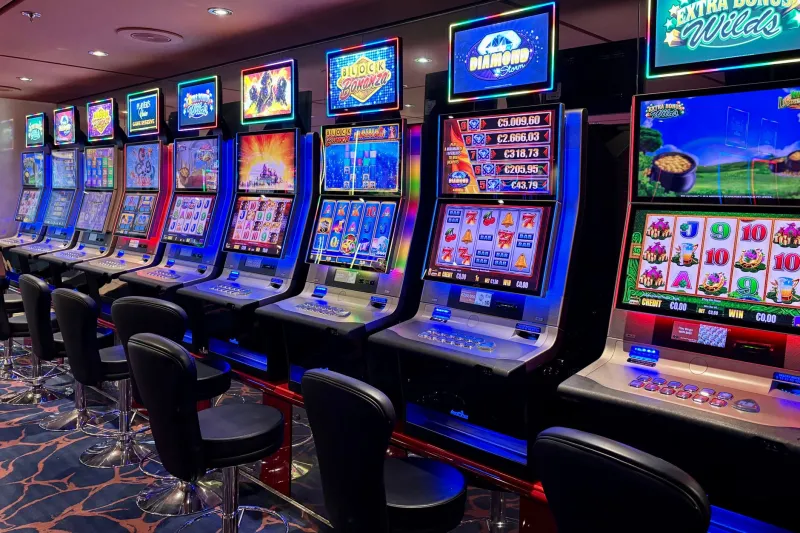
Walk into any major American online casino right now and you'll be greeted by a wall of slots. Thousands of them. Titles that look almost identical, developed by studios you've never heard of, with RTPs buried so deep in the terms and conditions that finding them feels like a part-time job.
It's overwhelming by design. The assumption has always been that more choice equals more engagement. Keep players scrolling, keep them clicking, and eventually they'll drop money somewhere. It's a strategy borrowed from fast food menus and streaming services—and it works about as well as you'd expect.
Hugo Casino Norge took one look at that playbook and went the other direction.
The result? A game library that, by most player accounts, feels about 40% better—not because new titles were added, but because the dead weight was cut and what remained was genuinely worth playing.
The Problem With 5,000 Clones
Here's a number that should give American operators pause: the average player on a large US-facing platform engages with fewer than 12 unique games over their entire lifetime on that site. Twelve. Out of five thousand.
That means the other 4,988 titles are essentially digital furniture. They exist to make the platform look robust. They create the illusion of value without delivering any. And they actively harm the player experience by making it harder to find the games that actually matter.
The Norwegian approach to this problem is refreshingly blunt: if a game isn't being played, it shouldn't be there. Hugo Casino's curation model starts with player behavior data, cross-references it with verified RTP performance, and then applies a straightforward filter—does this game give players a genuinely good time, or is it just taking up space?
Games that fail that test get cut. No sentiment, no vendor pressure, no "but we paid for that license" handwringing. Gone.
Feedback Loops That Actually Feed Back
What makes this model work isn't just ruthless pruning—it's the feedback infrastructure behind it. Hugo Casino has built player response mechanisms directly into the experience, gathering real-time data on session length, return rates, and player-reported satisfaction across every title in the library.
This isn't a quarterly survey emailed to your inbox that you'll never open. It's continuous, granular, and actually used.
When a game starts showing declining engagement—even if it's technically performing well on paper—that's a signal. Maybe the volatility profile doesn't match what players are actually looking for. Maybe a newer title from the same developer is eating its lunch. Whatever the reason, the data shows it, and the library responds.
American platforms rarely have this kind of feedback sensitivity because their business model doesn't require it. When you have 5,000 games, individual title performance is almost irrelevant. The house wins on volume. Hugo Casino's model only works if each game in the library is pulling its weight—which means the library has to stay honest.
Algorithmic Matching: Finding Your Game Before You Know You Want It
The other piece of this puzzle is how Hugo Casino surfaces games to individual players. Rather than dumping the full library onto a single scrollable page and hoping something catches your eye, the platform uses behavioral matching to present games that align with your actual playing patterns.
Spend most of your time on medium-volatility slots with bonus rounds? The algorithm knows. Tend to bail on games after ten minutes if you haven't hit anything? It knows that too. Over time, the recommendations get sharper, and players spend less time hunting and more time actually playing.
This might sound like a small thing, but the psychological impact is significant. Decision fatigue is real. When you're staring at thousands of options, your brain starts making worse choices—you either pick something random or default to whatever's highlighted in a promotional banner. Neither of those outcomes is good for the player.
Reduce the cognitive load, and players make better decisions. They find games they genuinely enjoy. They stay longer, spend more deliberately, and come back because the experience was actually satisfying—not because they're chasing a loss or mindlessly spinning through unfamiliar titles.
What Players Actually Say
The feedback from Hugo Casino's player base tells a consistent story. Players who migrated from larger American platforms consistently describe the same initial reaction: mild skepticism followed by genuine surprise.
"I thought I'd miss having more options," one player noted in a community forum discussion. "But honestly? I found three games I actually love within the first week, and I've barely needed to look anywhere else since."
That sentiment—finding games you love rather than games you tolerate—keeps coming up. It's not something American casino operators talk about much, because it's hard to monetize love. It's much easier to monetize confusion and volume.
But Hugo Casino's retention numbers suggest that love, or at least genuine player satisfaction, is actually the more durable business model. Players who feel well-served by a platform don't need to be lured back with aggressive promotions. They just come back.
The Business Logic Behind Quality
For any American operators reading this and feeling uncomfortable, here's the uncomfortable math: maintaining a library of 5,000 games costs real money. Licensing fees, technical integration, compliance testing, customer support for titles nobody plays—it adds up.
Hugo Casino redirects that overhead into improving the games that actually matter. Better versions of great titles, deeper integration with player feedback systems, and ongoing curation work that keeps the library sharp.
It's the difference between a restaurant with a 200-item menu where half the dishes are mediocre and a tighter menu where everything is genuinely worth ordering. The second restaurant is harder to run. It requires more discipline, more honest assessment, and more willingness to cut things that aren't working.
But the customers keep coming back. And they tell their friends.
In a market where American casinos are still competing on catalog size, Hugo Casino is competing on something harder to copy: genuine quality. That's a gap that's not going to close itself.