The Streak Myth: How Hugo Casino Players Stopped Gambling on Feelings and Started Playing the Numbers
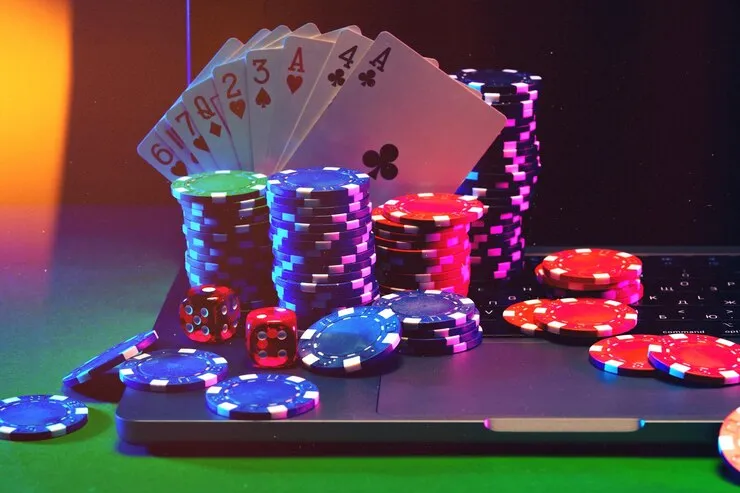
Photo: person analyzing casino data on laptop with playing cards and chips on desk, via img.freepik.com
The Most Costly Story Gamblers Tell Themselves
Picture a Saturday night at any major casino floor in Las Vegas or Atlantic City. Somewhere near the slots, a player is hunched over a machine, convinced it's about to turn. They've been feeding it for forty minutes. It's cold right now, sure — but it has to heat up eventually. Right?
Wrong. And that single misconception costs American gamblers billions of dollars every year.
The belief in hot and cold streaks — the idea that winning or losing runs carry momentum, that a machine is "due," or that your luck is somehow building toward a correction — is one of the most thoroughly debunked ideas in probability theory. Yet it remains the emotional engine behind most casino sessions in the US. Players don't just believe in streaks. They plan around them.
Hugo Casino's player community, shaped by a Scandinavian gambling culture that treats data like a compass rather than a scoreboard, has largely moved past this trap. Here's what that shift actually looks like in practice — and why it matters for American players who are tired of leaving the table feeling like they got played.
What the Math Actually Says About Streaks
Every spin on a slot machine is what statisticians call an independent event. The outcome of spin number 47 has zero relationship to spin number 46. The machine doesn't have memory. It doesn't owe you anything. The random number generator running underneath the graphics and sound effects doesn't track your session history and decide it's time to reward your patience.
This is the core concept behind something called the Gambler's Fallacy — the deeply human tendency to see patterns in random sequences. Our brains are pattern-recognition machines. That's mostly a feature, not a bug. But in a casino environment, it becomes an expensive liability.
When you flip a coin and it lands heads five times in a row, the probability of it landing tails on the sixth flip is still exactly 50%. The coin doesn't know it's been on a streak. Neither does the slot machine.
Norwegian gambling culture, which leans heavily on consumer transparency and player education, has made this kind of mathematical literacy a baseline expectation rather than a niche interest. Hugo Casino reflects that philosophy directly — and it changes the way players approach their sessions from the first minute.
How Session Goals Replace Streak Chasing
The practical difference between a streak-chaser and a session-manager isn't really about discipline. It's about the framework they're using before they even start playing.
A streak-chaser walks in with a vague goal: win back what they lost yesterday, ride the hot machine until it cools, or just "see how it goes." Their exit strategy is emotional — they'll leave when they're up big, or when they've lost more than they're comfortable admitting.
A session-manager sets parameters before they start. How much are they willing to spend? What does a satisfying outcome actually look like — not the jackpot fantasy, but a realistic, probability-based win threshold? At what point does quitting make mathematical sense regardless of how the last few spins felt?
Hugo Casino's tools and responsible gaming features are built around that second model. Players can set session limits, loss limits, and time boundaries that don't bend to the emotional pull of a near-miss or a brief winning run. The structure is there specifically because the house knows how hard it is to make rational decisions when you're in the middle of a session and convinced the tide is about to turn.
The Near-Miss Problem: When Losing Feels Like Almost Winning
Slot machines are engineered to create a specific psychological experience. Near-misses — two jackpot symbols landing with the third just above or below the payline — activate the same reward pathways in the brain as actual wins. Studies have shown that near-misses increase the urge to keep playing even though they are, by definition, losses.
This is deliberate design. And it's one of the primary mechanisms that keeps streak-chasers locked in long past the point where quitting would have been the smarter call.
Recognizing a near-miss as a loss — not a sign that the jackpot is imminent — is one of the cleaner mental reframes that separates informed players from reactive ones. Hugo Casino's educational approach doesn't shy away from explaining how these mechanics work. That kind of transparency might seem counterintuitive for a casino, but it reflects the Scandinavian model: players who understand the game tend to enjoy it more sustainably, and sustainable players are the ones who stick around.
Building a Session Strategy That Actually Holds Up
So what does a data-driven session look like in practice? A few principles that Hugo Casino players tend to apply:
Set a hard loss limit before you start. Not a rough idea — an actual number. If you're comfortable losing $100 in an evening of entertainment, that's your ceiling. When you hit it, you're done. No negotiating with yourself because you were up $40 an hour ago.
Define what winning looks like in advance. Not the jackpot. A realistic target — maybe a 20% or 30% return on your session budget. If you hit it, seriously consider walking. Greed is how winning sessions become losing ones.
Track your session time, not just your balance. Fatigue impairs decision-making. Long sessions tend to drift toward worse choices, not better ones. Build in a time limit the same way you'd build in a spending limit.
Treat every spin as independent. Remind yourself, out loud if necessary, that the previous result has no predictive value for the next one. It sounds simple. It's harder than it sounds in the moment.
Use the tools available to you. Hugo Casino's responsible gaming features exist precisely for sessions when your own willpower needs a structural assist. Setting limits through the platform means the decision is made before your emotions get involved.
Why This Is a Wealth Mindset, Not Just a Gambling Tip
Here's the thing: the mental shift from streak-chasing to session management isn't just useful at a casino. It's a version of the same discipline that separates people who build financial stability from people who perpetually feel like they're one lucky break away from turning things around.
Casino gambling, done well, is a form of entertainment with a cost attached. When you budget for it the same way you'd budget for a night out or a sports event — with clear expectations and a defined spend — it stays in that category. When you start treating it as a wealth-building strategy, or a way to recover losses through sheer persistence, the math stops working in your favor in a hurry.
Norwegian casino culture gets this in a way that a lot of US gambling culture still doesn't. The goal isn't to never have a losing session. The goal is to make sure losing sessions cost what you decided they'd cost — not what the machine decided.
Hugo Casino players aren't winning more because they're luckier. They're coming out ahead more often because they stopped letting a losing streak convince them to double down on a story the numbers were never going to support.